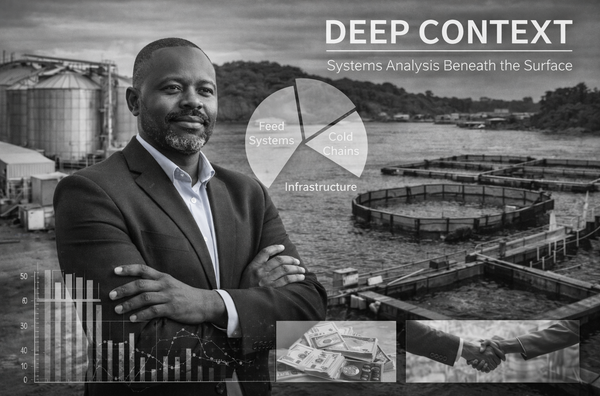
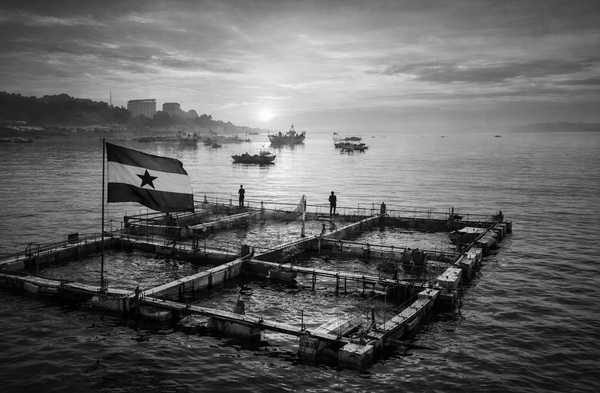
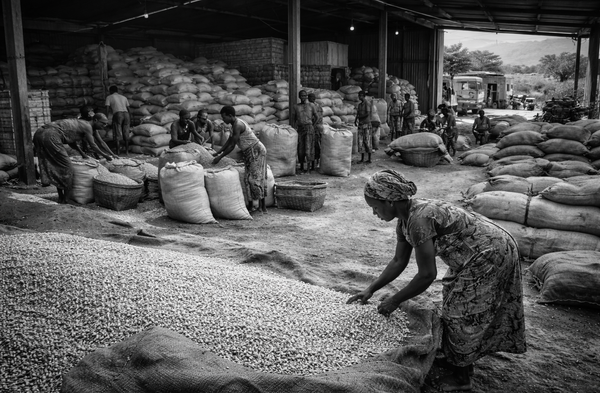
Africa's Blue Food Infrastructure Gap Is Becoming a Policy-Led Test Case

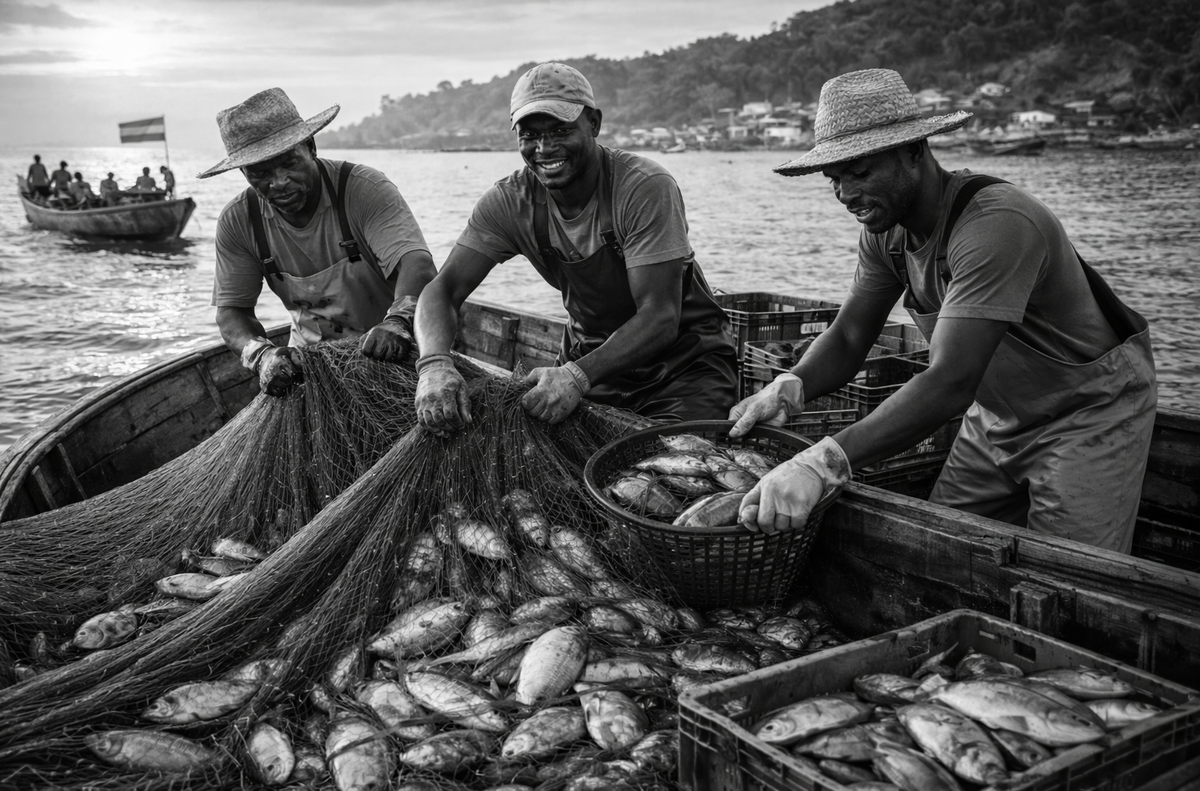
The Signal
What appears to be renewed interest in Africa's blue food sector is, in fact, a shift toward policy-led coordination of protein infrastructure. Ghana is emerging as an early test case for whether institutional design can outpace production capacity and whether frameworks can absorb capital before scale arrives.
What Changed
In late 2025, Ghana launched an Aquaculture Development Fund under new legislation and announced the opening of a Blue Food Innovation Hub in early 2026. Simultaneously, the African Union designated blue foods as the centerpiece of its continental Blue Economy Strategy.
These moves mark a departure from past, fragmented approaches. Rather than production targets or scattered pilot projects, they represent an attempt to coordinate finance, infrastructure, and market access around a single protein pathway.
Why This Matters
Africa's blue food losses are structural, not marginal. Roughly one-third of aquaculture output disappears due to inadequate cold chain and post-harvest infrastructure—more than double the global average. At this loss rate, infrastructure investment generates outsized returns even before production expands.
The signal is sequencing, not scaling. Governments are testing whether coordinated institutional frameworks can absorb capital and technology more effectively than past uncoordinated interventions.
What to Watch
- Whether Ghana's Fund disburses capital and builds a credible project pipeline
- Whether other African nations replicate the Fund-plus-Hub model rather than announcing standalone targets
- Whether the AU strategy produces financing alignment or remains policy rhetoric
What Not to Track
Broad production targets. African governments have announced ambitious goals before. The signal is in institutional execution; disbursement rates, Hub project selection, and replication by other nations, not ministry press releases.
Decision Implication
For policymakers, financiers, and protein strategists, the question is no longer whether blue foods matter but whether institutional coordination can precede scale without repeating implementation failures.
Source:
World Economic Forum, Investing in Blue Foods 2026; World Economic Forum, Africa’s Sustainable Blue Food Production (2026).
A separate Intelligence Brief examines why this shift matters and what may follow across policy, finance, and operations.