Africa's Financing Problem Is Becoming a Risk Problem
Africa’s finance gap is not only about scarce capital. NAFAD reframes it as a risk problem: can African institutions turn domestic savings into productive investment?
Africa’s finance gap is not only about scarce capital. NAFAD reframes it as a risk problem: can African institutions turn domestic savings into productive investment?

U.S. specialty crop losses are not mainly a consumer waste problem. They reflect a structural capital gap in the infrastructure between farm and market. The midstream is aging, underfinanced, while farm-level expansion continues without corresponding investment in storage and processing.
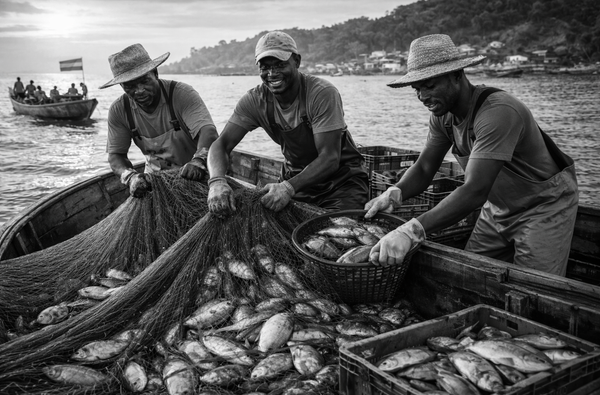
The Signal What appears to be renewed interest in Africa's blue food sector is, in fact, a shift toward policy-led coordination of protein infrastructure. Ghana is emerging as an early test case for whether institutional design can outpace production capacity and whether frameworks can absorb capital before
Africa’s finance gap is not only about scarce capital. NAFAD reframes it as a risk problem: can African institutions turn domestic savings into productive investment?
U.S. specialty crop losses are not mainly a consumer waste problem. They reflect a structural capital gap in the infrastructure between farm and market. The midstream is aging, underfinanced, while farm-level expansion continues without corresponding investment in storage and processing.
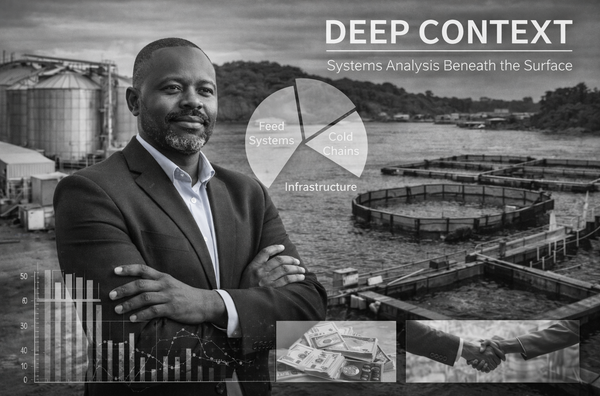
This Deep Context expands on our recent Intelligence Brief by examining the system beneath Africa’s blue food push. The focus here is not opportunity size, but structure…

What looks like growing momentum around Africa’s blue food sector is better understood as a coordination problem coming into focus. Capital, policy intent, and physical infrastructure are beginning to move in the same direction but not yet at the same speed…
The Signal What appears to be renewed interest in Africa's blue food sector is, in fact, a shift toward policy-led coordination of protein infrastructure. Ghana is emerging as an early test case for whether institutional design can outpace production capacity and whether frameworks can absorb capital before
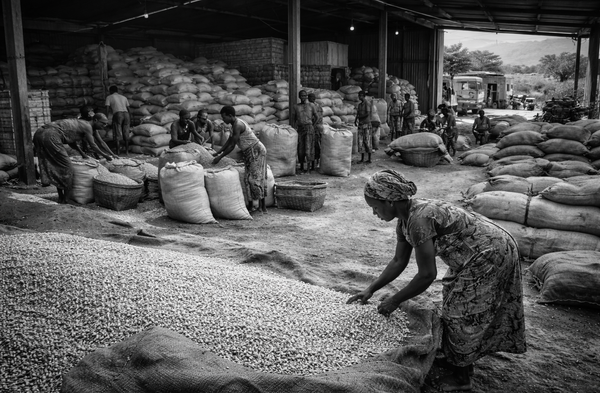
Climate finance for agrifood systems remains limited not because risk or need is unclear, but because funding frameworks favor policy processes and large programs over the physical and commercial layers where resilience is built, reinforcing a persistent structural allocation problem...
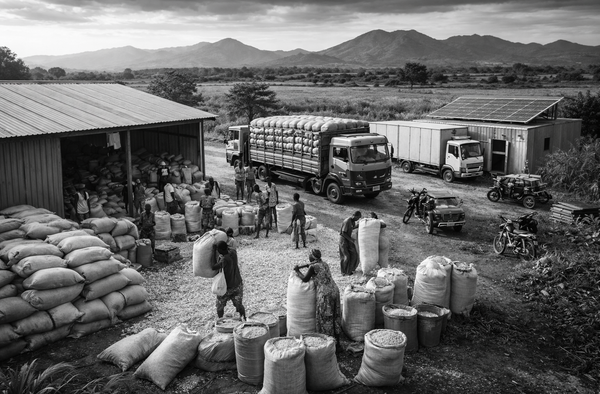
What looks like a shortage of climate finance for agrifood systems is better understood as a misalignment problem. Funding continues to flow toward plans and large projects, while the parts of food systems that build resilience: storage, logistics, and small enterprises, remain underfinanced...

Food export power is increasingly decided by water governance and infrastructure, not yields alone. Regions that manage water as a strategic asset sustain capacity; those that do not face abrupt decline...
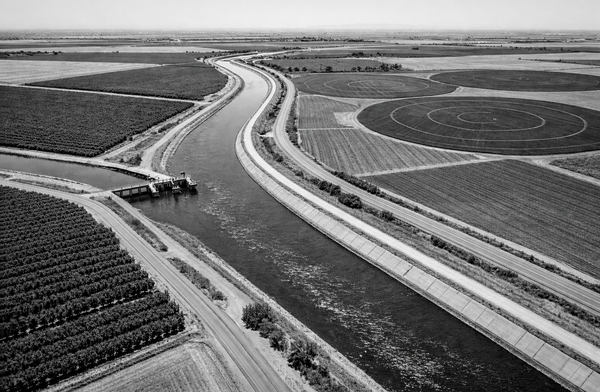
The Signal Global food production is shifting away from long-established exporters constrained by water limits and rising costs toward producers that secured water access and export infrastructure earlier, a trend becoming more visible as climate pressures tighten. The Intelligence The contrast between California and Peru shows how this change

Business readiness is emerging as a system constraint on labor absorption. Where public services and operational efficiency lag, economies struggle to convert demographic pressure into productive jobs...

The World Bank’s Business Ready 2025 points to a structural risk, not a ranking issue. Economies under the greatest demographic pressure to create jobs are the least prepared to absorb them, exposing an execution gap with implications for capital allocation, migration, and reform durability...

THIS WEEK’S SIGNAL Retail’s biggest season is no longer a short-lived spending frenzy. It has become a multi-week global ritual shaped by consumer caution, algorithmic discovery, and rising expectations of transparency. New data from BCG shows that shoppers are planning earlier, spending more deliberately, and increasingly